
How to Recognise Swimming Progress Beyond the Stopwatch
A personal best is easy to celebrate. So is moving into a new swimming level. Between those moments, though, progress can be harder to spot.
For a child learning to float, a swimmer refining a stroke or an adult building endurance, a useful question is: What can I do now that I could not do reliably before?
At Cybersmart Aquatics in Milnerton, our programmes span beginners, stroke development, competitive squads and coached adult swimming. The signs worth looking for depend on the swimmer’s starting point and goal.
Look for a skill that is becoming reliable
Swimming development includes more than covering a distance. Swim England’s Learn to Swim Framework, for example, includes floating, breathing, coordination and other aquatic skills. It also explains that children need to demonstrate tasks consistently, rather than succeed only once.
The useful distinction is between a promising attempt and something the swimmer can repeat. Ask the teacher or coach what they are looking for: an improvement that is obvious to them may be easy to miss from the poolside.
What progress can look like at different stages
Learn-to-Swim: growing independence
A learner may put their face in the water more comfortably, float with less assistance or move towards the side with greater control. These are examples within Cybersmart’s Learn-to-Swim foundations. Progression follows demonstrated skills and coach assessment, rather than a promised number of lessons.
Ask: “Which skill is becoming more independent, and where is support still needed?”
Stroke Correction: better coordination
Cybersmart’s Stroke Correction programme develops body position, breathing, timing and coordination. A useful sign might be breathing that fits into the stroke more consistently, rather than interrupting it.
Ask: “What specific change should I look for when this stroke improves?” Completing another length alone will not answer that question.
Competitive squads: executing the details
For squad swimmers, progress can include more consistent pacing, turns and legal finishes—skills included in our competitive pathway. USA Swimming’s American Development Model similarly recognises technical execution, pacing and process goals alongside performance outcomes.
A time goal describes the result a swimmer wants. A process goal identifies something to execute, such as the turn their coach has asked them to improve. Ask: “Which part of that swim did you execute better, and what needs work?”
Race times still matter. Better execution is useful information; it does not guarantee a personal best at the next gala.
Adult swimming: progress towards your own goal
An adult beginner and an experienced Masters swimmer need different measures. Cybersmart offers beginner pathways as well as coached adult swimming for people already comfortable swimming continuously. Swim England’s Adult Swimming Awards also distinguish learning independence from developing technique and stamina.
Depending on the agreed goal, progress might mean completing a familiar distance with better control or maintaining a more consistent pace. Ask: “What would meaningful improvement look like for me?”
Make the next milestone specific
Choose one suitable skill with the teacher or coach and agree what improvement would look like. Keep the comparison fair: use a similar task, distance and level of assistance, rather than comparing unrelated swims. Let the coach set the appropriate challenge.
A useful conversation has three parts:
- What has improved? Ask for a concrete example.
- What is the next priority? Identify one clear focus.
- When should we review it? Agree a suitable point to check again.
For children, this can be a relaxed conversation about what they learned or enjoyed. Parents do not need to turn every lesson into a test or give competing technical instructions from the side.
If progress is unclear, ask for a review
Recognising smaller improvements should make progress clearer. If a swimmer keeps struggling with the same task, is becoming discouraged or cannot identify what they are working towards, raise it with the teacher or coach.
Ask whether the current goal, support or placement needs adjusting. “Everyone progresses differently” is a reason to look at the individual; it should still be possible to explain the next step.
For current Cybersmart swimmers, start with that conversation. If you are new to the club or unsure where to begin, explore our swimming programmes or request a free 15-minute assessment. Children and adults are welcome; our team confirms the arrangements, and there is no obligation to enrol.
Further reading: Swim England’s and USA Swimming’s resources above provide external development guidance. Cybersmart’s programme descriptions and placement information are set out on our own website.
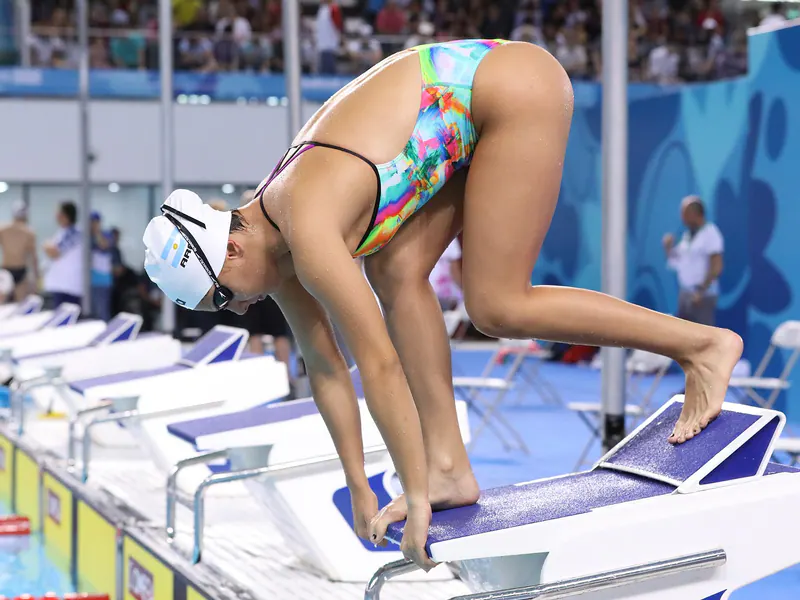
Illustrative photographs, not Cybersmart swimmers or facilities. Article image: Sandro Halank, Wikimedia Commons, swimming training at Buenos Aires 2018, CC BY-SA 4.0. Listing image: Jeremykemp, Wikimedia Commons, swimming lesson, 2010, CC BY-SA 3.0. Both cropped and resized; the Listing image is also brightened. The adapted photographs retain their respective licences.

